In 34 A.D., Jesus appeared directly to Paul on the road to Damascus and revealed to him a gospel - not received from any human source, but delivered by divine commission. “But I certify you, brethren,” Paul would later write, “that the gospel which was preached of me is not after man. For I neither received it of man, neither was I taught, but by the revelation of Jesus Christ.” (Galatians 1:8–9)
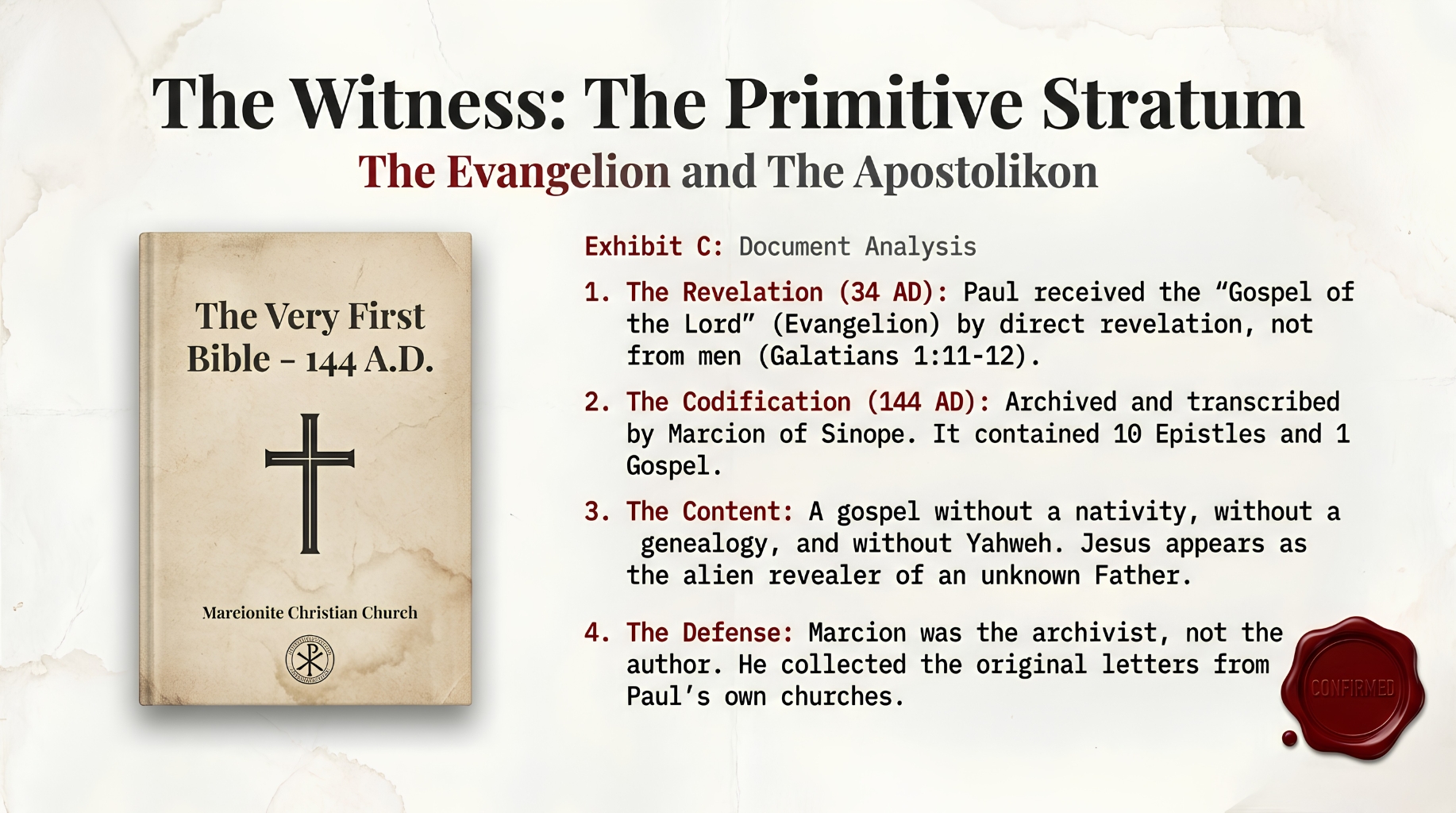
This gospel, the Evangelion, began with a line that stands in direct tension with the later apparatus of covenantal theology: “In the fifteenth year of the reign of Tiberius Caesar, Pontius Pilate being governor of Judea, Jesus descended into Capernaum.” The Greek verb employed here - καταβαίνω (katabainō), rendered in the aorist as κατέβη - does not merely describe an arrival from elsewhere. It denotes the descent of a god from the heavens, a theophanic manifestation entering history from above. No birth in Bethlehem. No genealogy binding Him to David or Abraham. No fulfillment of ancient prophecy. A divine being entered the world during the theophanic descent of 29 A.D., dated to the fifteenth year of Tiberius, revealing a Father previously unknown: distinct from Yahweh, the Bronze Age deity of covenants, laws and retributive violence.
Paul carried this gospel throughout the Roman world, founding the first Christian congregations and writing to them letters that constitute the Apostolikon. And he wrote with urgency: “I marvel that ye are so quickly changed, from him that called you in the grace unto a different gospel: Which is not another; but there be some that trouble you, and would pervert the gospel of Christ.” (Galatians 1:4–5) He foresaw the revision that would follow. “But though we or an angel should announce to you a gospel contrary to what ye have received, let him be accursed.” (Galatians 1:6)
Eighty years later, in 144 A.D., Marcion of Sinope transcribed this gospel into the codex now known as the Evangelion. That same year, he stood before Pope Pius I in Rome. The dispute turned on that first sentence alone. Pius insisted Jesus was born of David’s line, fulfilling Hebrew scripture, and that the Father was Yahweh. Marcion held that Jesus descended from heaven in the fifteenth year, bringing a revelation that superseded and nullified the entire apparatus of Jewish law. One narrative required fulfillment. The other announced inauguration. They were mutually exclusive.

Full overview at the archival site
Available formats: Free Ebook | Paperback | Audiobook | Hardcover
